

Our Best Defensive Driving Tips
As much as we all love our automobiles, we dread the day we have to replace them. And like the passing of an old friend, when vehicles begin to have health problems, we silently know that we will eventually have to say good-bye. The worse way to have to part with a beloved car is when you’re in an accident, and your baby is totaled. With that in mind, the best way to prevent an accident on the road is by practicing sound Defensive Driving techniques.
1.Know Your Car

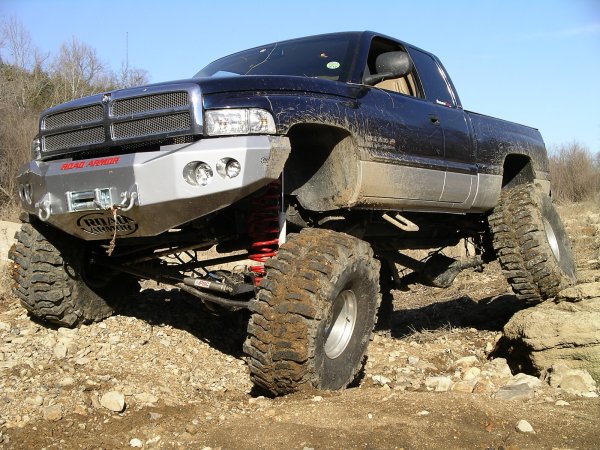
To be best able to respond to hazards on the road that might become accidents, you have to know your vehicle completely. What are your car’s capabilities? Strengths and weaknesses? What are the reliable systems? Are there maintenance issues that you haven’t taken care of? How do they effect performance? A sporty car can accelerate out of highway hazards better than an SUV or minivan. A four-wheel drive truck will handle better in rainy or snowy conditions than that speedy two-seater. Knowledge of your vehicle could save you when making a split-second decision.
2.Know Your Route
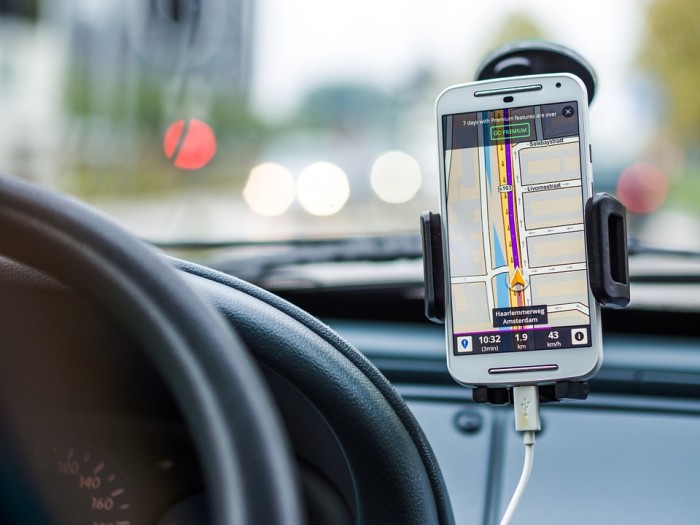
When on the road, whether just running errands around home, commuting to work, or enjoying long road-trips, it is always best to take a moment before your journey and plan your route in your head. You may need to use an online GPS mapping site or app to help you develop this great habit at first, but it will be well worth it. Knowing your route will allow you to plan your stops, minimizing both miles driven and time spent. It will allow you to consider the best roads, given the time of day and weather conditions. Tuning into an all-news radio channel will even get you up-to-date traffic reports for the roads to avoid due to construction or accidents. Better informed and better planned means better protected from roadway hazards.
3.Mind Your Surroundings

While driving, you have to CONSTANTLY keep your eyes on the road, and in your mirrors. You should be watching in front of you, but not just for hazards like the stereo-typical child with a ball in the yard. You want to develop a FEEL for the traffic, for the other drivers, and for the flow of cars. Envision a body’s blood stream, where nutrients flow to where they are needed, and waste is directed elsewhere. Let yourself flow in the traffic. Scan in front of you for what traffic lights are doing a block or two away. If you see a red light further down the road, decelerate to account for stopped traffic you haven’t encountered yet.
Watch for larger shopping centers that can disgorge large amounts of cars at a moment’s notice. Be mindful of bottle-necks, like the car turning left, blocks ahead of you. Make an appropriate lane change before that obstruction causes you to stop. Show your love for other drivers by flashing your lights to oncoming motorists if you see a police checkpoint or radar. Many “police operations” like that are nothing more than speed traps and money grabs. There is little actual concern for “safety”. Don’t just watch the road in front of you, though. Ample attention has to be paid to your mirrors (both rear and side mirrors). To drive defensively is to be on guard from every direction while on the road. Is someone closing in on your bumper? You can move to a slower lane, or slow down to increase the cushion in front of you.
Minding your surroundings also means being a courteous driver. What should you do if you see a merge lane with drivers waiting to enter your roadway, on a four-lane road? Move to the left lane and give them the right lane to merge into. Someone is texting at a red light in front of you and it changes? Why lay on the horn when a short beep will do? Someone tailgating you? Slow down and move toward the shoulder, giving them the opportunity to pass you. Aggravation gone.
4.Mind Your Speed

There are posted speed limits on all public roads, and they should usually be adhered to, but they are meant to be a safety guide for drivers. Coming up to a sharp curve in the road? The Speed Limit drops to 20 miles per hour. (Affordable Car Projects is based in the United States, but we know our Metric readers can make the conversion.) Leaving the city for a country lane? The Speed Limit goes up to 45 mph. Take any highway on-ramp, and the posted speed is 55 mph or higher. However, that same sharp curve under rainy conditions should probably be navigated at only ten or fifteen mph. On American highways, drivers frequently exceed the posted speed limit by ten or twenty mph.
Generally, if you are five or ten mph above the posted speed limit, police won’t ticket you, but there are exceptions. In New York State, for example, state troopers have indicated that you are safe from ticketing when doing ten percent higher than the posted speed. That’s barely six mph on most highways! An important guide is the habits of the drivers around you. If you drive with the flow of traffic in cities, you will find it easier to keep a cushion of distance in front of and behind your car, decreasing the risk of accidents.
Conversely, when highway driving, it is preferable to exceed the speed of the surrounding drivers. That allows you to manage each encounter, passing cars and trucks, while still staying safely close to the posted speed limits. When you have passed a group of vehicles, it’s best to decelerate and hover in less congested stretches of road.
“The Two-Second Rule” is often mentioned in articles about safe driving, that you should be able to select a landmark ahead, and watch the car in front of you pass it, then count two seconds before you do so. However, this is just based upon Isaac Newton’s First Law of Motion.* Objects in motion want to stay in motion, and it takes time to stop them. The greater the speed, the more time it takes to stop. Therefore, when highway driving, the two-second rule should be four or five seconds.
5.Watch For Hazards
Traffic conditions are a constantly seething, flowing, changing entity with a mind of its own, periodically spewing chaos onto the roadways. Congestion can come from anywhere. A broken down car or accident, a stopped police cruiser or ambulance, and drivers become “rubber-neckers”. Try not to become one of them. Don’t slow down to look for trouble, when there is enough in everyone’s life already. Keep your focus on the road ahead, and you will avoid many pitfalls. Road construction is another hazard, from the lane changes and forced merges to the loose stones and sharp objects that can enter the roadway. Use extra caution and limit your speed in these areas. Schools, parks and shopping centers tend to have children and families around, and you should be mindful of them, too.
6.Watch For Changes

As drivers, we can “overlearn” to drive. When the morning commute becomes a routine, there is danger of your driving becoming mechanical, and losing attention for the details. Varying your route is a good way to prevent this, and sometimes you can even find a quicker route home from work! Just like there are hazards that change daily, sometimes roads, lanes, posted speed limits and traffic signals are altered. Don’t allow your routine to cloud your vision of the details.
7.The Best Defense is a Good Offense

They say that rules are made to be broken, but maybe they should only be bent a bit to accommodate difficult situations. Who hasn’t exceeded speed limits when they are running late? If you have to speed, you have to do so safely and in a smart manner that avoids endangering yourself and other drivers. Speed up a few miles above the posted speed limit if you sense a light that has been green a long time (a stale green light). That makes it easier to avoid red lights, without having to run yellow ones. Adjust your route if you notice upcoming construction or congestion. Make a quick right and find your way to another major artery in the area, even if you have to make a second right and double back.
Defensive Driving is really about using all of your observational skills to anticipate and avoid road hazards that would lead to accidents. You can only control your behavior on the road, but when you develop the ability to predict the behavior of other drivers, you can protect yourself and avoid danger. Others will benefit from your proactive driving. By following these suggestions, you will become a more capable, safe, and sensible driver. Happy Travels!
* Newton’s Laws of Motion: 1. “A body at rest will remain at rest, and a body in motion will remain in motion, unless it is acted upon by an external force.” 2. “The force acting on an object is equal to the mass of that object times its acceleration.” ( F = ma, where F is force, m is mass, and a is acceleration.) 3. “For every action, there is an equal and opposite reaction.”

Mitch is an Army veteran with two overseas tours, a former shopping mall operations manager, and an avid reader. He enjoys alternate archeology and history, punk, funk and classic rock music, Marvel Comics and films, and needs a haircut.





Comments
Pingback: doxycycline generic
Pingback: fluconazole 100 mg
Pingback: mobic medication
Pingback: mirtazapine for cats cost
Pingback: diflucan over the counter nz
Pingback: metoprolol 50 mg
Pingback: lasix furosemide price
Pingback: sildenafil cvs price
Pingback: vidalista tadalafil 5mg
Pingback: orlistat tablet name
Pingback: ozempic breakfast
Pingback: doxycycline hyclate 100mg shelf life
Pingback: are doxycycline side effects reversible
Pingback: doxycycline for acne vulgaris
Pingback: hims tadalafil atorvastatin
Pingback: bupropion wellbutrin 75 mg tablet
Pingback: acyclovir cream otc or prescription
Pingback: terbinafine nail fungus patient guide
Pingback: minoxidil full faq
Pingback: minoxidil women’s clinical insights
Pingback: vardenafil hepatic contraindications
Pingback: avanafil market price factors